

How we work
A disciplined path from brief to commercial solution.
A structured development process that takes a customer brief through food science, refinement, validation and towards commercial production.
- Understand
- Protect
- Develop
- Refine
- Validate
- Scale
- Understand
Start with the brief.
We begin with the product idea or current product and the outcome you want. We also look at the benchmark, the manufacturing environment and the commercial objective.
We also identify the capabilities the manufacturer already has, what should remain in-house and where additional food science or a specialist component can create value.
- Protect
Share only what is needed, when it is needed.
Confidentiality controls are put in place before sensitive formulations, process information or customer IP is exchanged. Access can be restricted on a need-to-know basis.
- Develop
Turn the brief into working solutions.
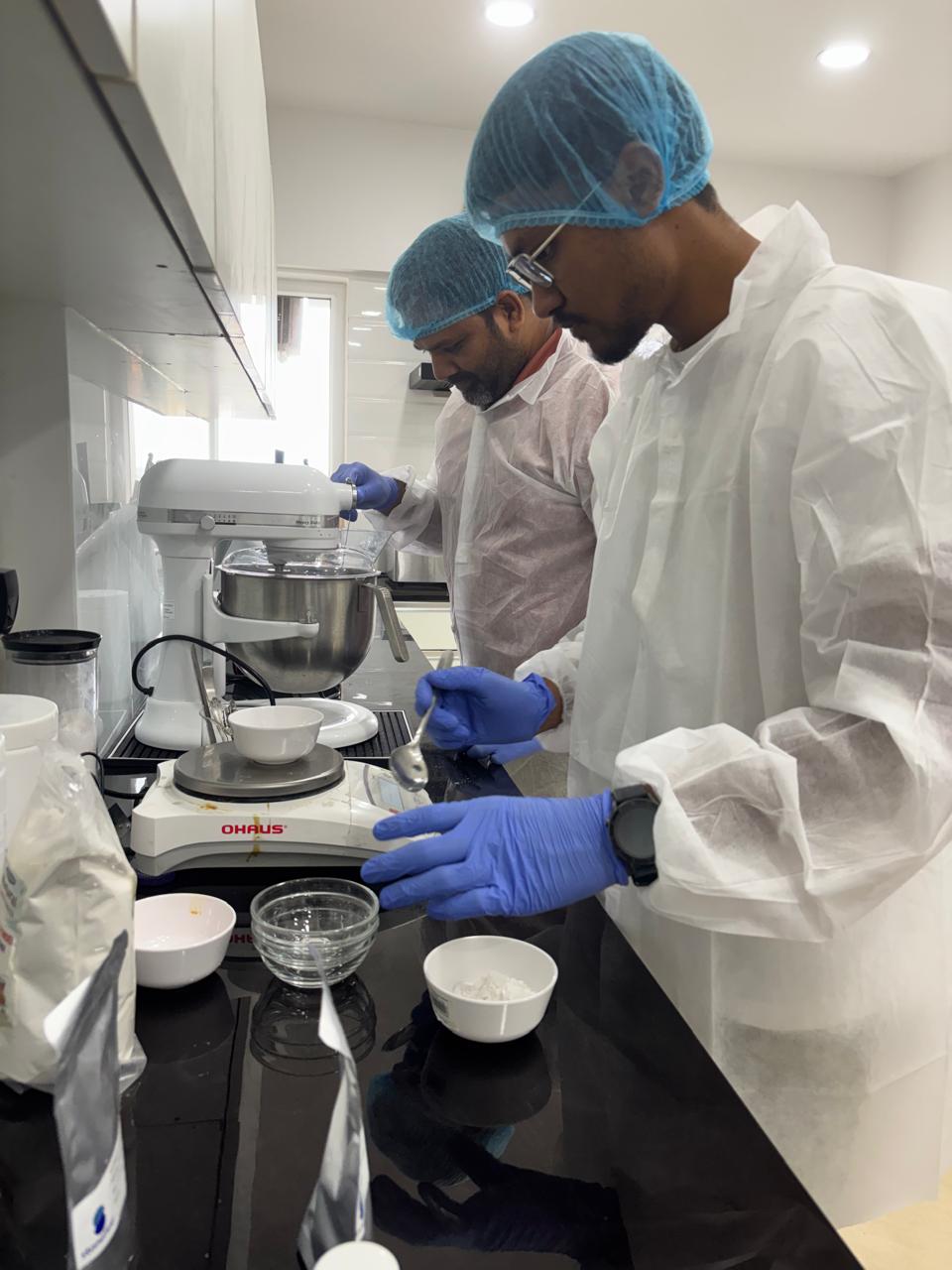
Our food scientists formulate, prototype and trial against the agreed product and manufacturing objectives. Each iteration should build on what is learned from the previous one.
For improvement projects, this stage can also mean reviewing the existing formulation, current process, benchmark product and manufacturing constraints together.
- Co-create and refine
Develop together where collaboration adds value.
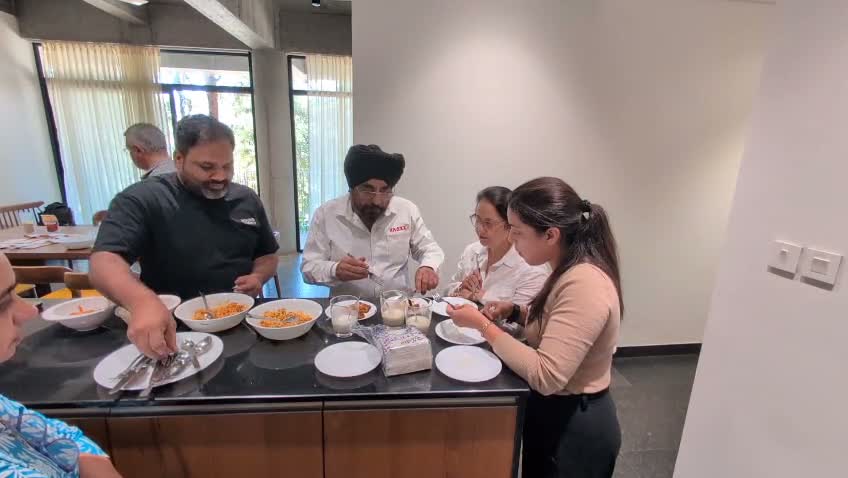
Customer teams can participate in selected development and evaluation sessions so that product, sensory and manufacturing decisions can be refined together.
- Taste
- Texture
- Appearance
- Application
- Manufacturing practicality
Co-creation
Your team stays part of the process.
Development works best when technical expertise and customer knowledge come together. Co-creation can happen digitally, in Australia or through the Knoxx Innovation Nexus in Bengaluru where direct collaboration helps move the project forward.
See Our R&D Network- Validate and scale
Make sure it works beyond the bench.
The preferred solution is assessed against agreed product and manufacturing criteria before moving towards commercial production.
The purpose is to confirm product performance, repeatability, process compatibility and manufacturing practicality.
.jpeg)
- Commercialise and govern
Protect consistency as the solution moves into production.
Once a solution is approved, Knoxx Innovations provides the technical framework for commercial production and remains the technical custodian of the approved solution.
The approved route may involve supplying an input developed by Knoxx Innovations for use within the customer's own production, or producing a specialist component through a controlled manufacturing arrangement. The customer remains the finished-product manufacturer, while Knoxx Innovations remains technical custodian of the developed input or system.
How we validate
Success is agreed before it is claimed.
The benchmark depends on the project. It may include taste, texture, consistency, yield, labour, throughput, manufacturing cost or another agreed measure.
Product performance
- Taste
- Texture
- Appearance
- Application performance
- Consistency
Manufacturing performance
- Cost
- Yield
- Labour
- Throughput
- Capacity
- Repeatability
What would you like to create or improve?
Start with an idea, a customer brief or something in your current product or process that you want to make better.
Already have a defined brief? Use our brief form. Sensitive recipes or formulations should only be shared after the appropriate confidentiality step.